Excerpt from the Book:
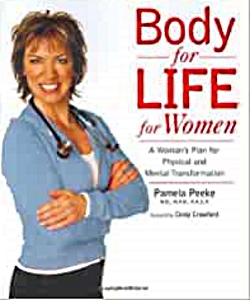

By Dr. Pamela Peeke, M.D., M.P.H., F.A.C.P.
Published by Rodale, April 2005
Your Fitness Needs, Milestone By Milestone
I've worked with thousands of women. Twenty-somethings to 50-plus career women. Anorexics and starvers to bingers and bulimics. Top athletes to women who were so obese that they could barely walk a block. For all of them, a customized fitness "prescription" became an essential part of their self-care.
Although women of every age reap tremendous physical and mental benefits from regular physical activity, age is a factor in how much and what kind of activity their bodies need in order to get fit, energetic, and strong. Here's a Milestone-by-Milestone description of a woman's physical activity needs.
Milestone 1: Menstruation to First Pregnancy
Women in Milestone 1, with their surging estrogen and burgeoning breasts, hips, and thighs, typically have 21 to 32 percent body fat, well within a healthy range. They can keep this optimal level with regular physical activity. And because there's evidence that heart disease and diabetes can begin to develop in adolescence -- even childhood -- being active now, and staying active, can help protect them from heart disease, cancer, and diabetes down the road.
The benefits of fitness extend beyond physical health. Research shows that physical activity eases stress and depression in girls and that girls who play sports have a more positive body image and higher self-esteem than those who don't. For that matter, girls who are active in sports are less likely to contemplate suicide than girls who aren't; they tend to spend more time concentrating on their physical accomplishments and the fun of teamwork than obsessing about their weight. Another study shows that when preteens and teen girls get in just 30 to 40 minutes of exercise each day, they can lower by 30 percent their likelihood of developing breast cancer later in life.
Milestone 2: The Reproductive Years
Women don't get fat from pregnancy. Their bodies simply are gaining the necessary reserves on hips and thighs to fuel the extra 500 calories a day required for breastfeeding. Women who enter pregnancy fit and stay physically active throughout the pregnancy are less likely to gain excess weight, and therefore, they have less to lose after they give birth. And being strong can definitely improve your endurance for the marathon of labor!
Of course, once the baby is born, a woman has to work to lose that excess fat, and the older you are when you deliver, the harder it is. Then, amid kids, career, the partner, and the whirlwind of everyday life, women in Milestone 2 face a most formidable challenge: to make physical activity a regular part of their high-stress lives. According to one study, being a mom cuts a woman's time for exercise by at least 20 percent. But putting in that sweat time is essential.
Regardless of whether a woman bears kids or not, beginning in her thirties, she normally loses 1 to 2 percent of her muscle per year, slowing her metabolism. She can even begin to lose bone. Regular physical activity revs up metabolism, preserves muscle, and slows bone loss.
It also safeguards her future health. Regular moderate-to-strenuous physical activity reduces a woman's risk for certain female cancers triggered by estrone, a type of estrogen that increases with higher-than-normal body fat and is associated with an increased risk of breast and uterine cancer. If you do regular physical activity from 1 to 3 hours a week from your teens to about age 40, you'll cut your risk of breast cancer by 20 to 30 percent. Four or more hours a week can reduce the risk almost 60 percent.
It's pretty simple: Move the weight, remove the weight, and reduce your risk.
Milestone 3: Perimenopause and Menopause
Remember the way your body morphed at puberty? One day you were a beanpole, the next an hourglass. Well, once you hit 40, you're shape-shifting again. Although premenopausal women gain fat in the lower body to nourish children, women in Milestone 3, whose reproductive years are drawing to a close, gain it in their upper bodies. Think larger breasts, the emergence of back fat, weird little fat pouches near your armpits that hang over your bra, and the menopot. Hot flashes and other symptoms triggered by the swoops and dips of estrogen only add to the fun.
However! There's a huge difference between Milestone 3 women who are active and those who aren't. Women who stay fit through these years of hormonal fluctuations are less affected by the typical symptoms of menopause. They pack more lean muscle, have faster metabolisms, and can control their weight and body fat better. Physical activity also helps them control their blood sugar, blood pressure, and blood cholesterol, which become an issue for many women in this Milestone.
Milestone 4: Beyond Menopause
The goal of Milestone 4 women is to retain their functional independence and prevent disease. To do it, they need to pay special attention to achieving and maintaining adequate endurance, strength, and flexibility.
As a result of declining sex hormone levels, lack of physical activity, chronic stress, and overeating, women in this Milestone are at high risk for accumulating Toxic Fat. That's bad news, because apple-shaped women are at greater risk of heart disease than are pear-shaped women, who carry their weight on their hips, thighs, and bottoms. This extra weight can lead to chronic knee and back pain, which limit a woman's ability to get around.
Hormonal changes can also cause bone loss, raising a woman's risk of osteoporosis. In a recent study of nearly 90,000 women ages 50 to 64, almost one-third had bone density low enough to run an increased risk of fracture.
Happily, it doesn't take much physical activity to keep women in this Milestone fit and healthy. Weight training can build muscle, preserve bone, and improve strength, and simple walking can keep hearts beating strong. In one study, 73,743 women ages 50 to 79 were asked about their exercise habits, and those women who walked briskly or who engaged in more-intense exercise at least 2 1/2 hours per week were both 30 percent less likely to develop cardiovascular disease than women who didn't do either.
I recommend that women in all Milestones -- especially 3 and 4 -- seek out an experienced trainer who specializes in working with women 50 and over. Most midlife women have never lifted weights, and they need guidance to reduce the risk of training-related injuries. The price? Reasonable, and you need only a few sessions to learn proper form and technique, followed by perhaps monthly check-ins to make sure you're progressing well.
Pamela Peeke, M.D., M.P.H., F.A.C.P., is a clinical assistant professor of medicine at the University of Maryland School of Medicine, a Pew Foundation scholar in nutrition and metabolism, an adjunct senior research fellow at the National Institutes of Health and the author of the best-selling book, Fight Fat after Forty. A regular contributor to Good Housekeeping, Dr. Peeke is frequently quoted in O magazine, Shape, Vogue, Fitness, Glamour, and Redbook. She is the chief medical correspondent for Discovery Health TV and the spokesperson for its National Body Challenge. She appears as an in-studio expert for CNN and the networks. She maintains her private practice in Bethesda, Maryland. For more information, please visit www.drpeeke.com
Reprinted from Body-for-LIFE for Women: A Woman’s Plan for Physical and Mental Transformation by Pamela Peeke, M.D., M.P.H., F.A.C.P. (April 2005) © 2005 Pamela Peeke, M.D. Permission granted by Rodale, Inc., Emmaus, PA 18098. Click here to purchase Body For Life for Women
