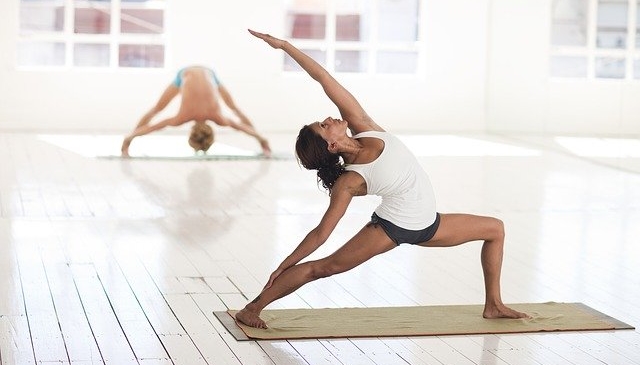
Photo by AndiP
What you really need to know to get started including types of yoga classes, yoga etiquette and tips.
Once you’ve decided that yoga is right for you, it’s great to be armed with a few basics of the practice so you make the right decisions and get the most out of it.
Yoga types
As there are many yoga classes out there, don’t be afraid to do a little investigation to find the best class for you. Generally for beginners Hatha or Vinyasa will be most appropriate which are basic styles and from this you can work your way up to something a little more advanced.
Hatha
Hatha is a slow paced and gentle style of yoga which makes it a good introductory class. Most of the yoga poses are basic and therefore easy to pick up.
Vinyasa
Vinyasa is a general term for many types of classes but what they have in common is their focus on breath - synchronised movements. The class tends to be more vigorous based on a series of performances called sun salutations where the movement is matched by the breath. The Vinyasa classes typically start with sun salutations to warm up the body and then follow with more intensive stretching.
Ashtanga
Ashtanga translates to mean ‘eight limbs’ and is a fast-paced and intensive style of yoga. The class includes a series of poses performed always in the same order. It is very demanding because of the constant movement from one pose to the next. In yoga terms this creates a ‘flow’ of movement.
Iyengar
This practice is most concerned with body alignment, focusing on the way your body should be positioned in each pose to obtain the maximum benefits and avoid injury. The poses are held over long periods and these classes use props like blankets, blocks and straps to help the alignment of the body.
Kundalini
Kundalini focuses on the breath in conjunction with physical movement in order to free energy in the lower body and allowing it to move upwards. In this class the exploration of the effect of breath is more essential than in other classes. Kundalini uses rapid and repetitive movements instead of the usual holds and additionally the teacher may include call and response chanting.
Bikram
Bikram is one of the most well known yoga types. This style is generally referred to as ‘hot yoga’ and carried out in a 95 to 100 degree room which aids loosening muscles and extreme sweating to cleanse the body. The Bikram method is composed of a set series of 26 poses but the number of poses used will vary from class to class. Beware of the heat when opting for this class.
As well as the yoga types I have mentioned above there are a few additional styles, some of which are more recent developments such as Anusara, Jivamukti, Forrest, Kripalu, Intergral and Sivananda however these are more specialised and more advanced so it is best to initially start with the first few outlined.
How to get started
Find a class
Once you have discovered which type of yoga style is suited to your ability and personality you need to find a class offering it. Search the local papers, local gyms or search online. There are many studios around these days so you are more than likely to find one close to home.
What to expect
In most classes students place their mats facing the front of the room in a rough grid and wait in a cross legged position until the teacher turns up. There may be initial chants before the class begins and warm up poses to get started with. It is common for the teacher to get involved with each student and go round the room helping them to improve their poses and positions so don’t be afraid of a little help.
Equipment
- Clothing - make sure it is something you feel comfortable in and is breathable. Any exercise trousers will do with a loose but long top as some poses involve a lot of stretching.
- Shoes - most yoga is done barefoot and you are requested to leave your shoes near the entrance.
- Mats - yoga mats are commonplace as it helps to define your personal space, create traction for your hands and cushions your surface. If you don’t own your own, it should be easy to rent or borrow a mat for a session. In the long run it is better to purchase one as then you know it is clean.
- Blankets, blocks and straps - these would classify as additional equipment acting as props to use in the class. They make you more comfortable and improve your alignment and pretty much come in hand for all sorts of things, especially in the advance classes.
Yoga etiquette
Most of the yoga rules are basic to any gym however a few are individual to yoga and to reduce embarrassment one should be made aware of.
- Remove your shoes and place by the door
- Turn off your phone
- Arrive on time, or even before
- Respect the teacher
- Keep any variations you make appropriate to the class
- If possible, only go to the bathroom in breaks
- Don’t skip the end Savasana (relaxation)
Other tips
- Don’t have a big meal right before the class
- Drink plenty of water
- If it is your first class, let the teacher know
- Ask for help!
- Learn about the type of class you are attending to avoid shock
- Look around the class and learn from more experienced students
Enjoy it!
Article by:
Gemma Carter is a fully trained fitness and life coach. Visit her website at http://www.cartercoaching.co.uk
